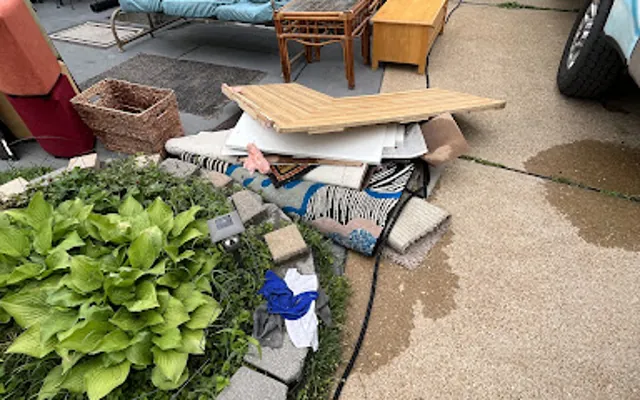
Aging water heater and supply line failures in 1980s Terra Nova homes surface as warm spots on tile or rising water bills. Crews respond fast to stop the spread.

Crews locate the exact break in the supply line or main, confirm the water is shut off, and clear the area around the leak. Terra Nova's sloped terrain can send water further from the break point than flat ground, so crews map the full affected zone before the next step.
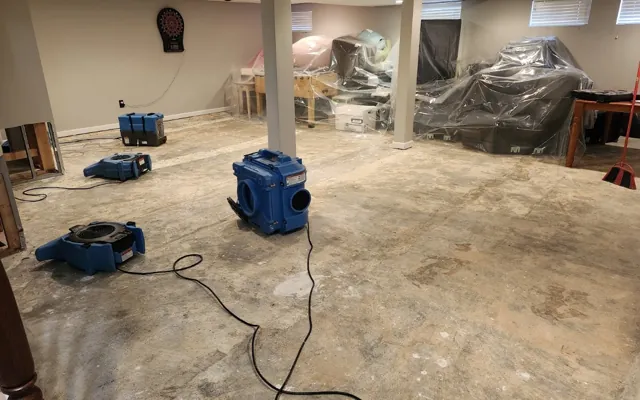
After pumping out standing water, crews test all porous materials for moisture. Flooring, insulation, or drywall that has taken on too much water is carefully removed so the underlying structure can dry without hidden mold developing underneath.
Air movers and dehumidifiers run twenty-four hours a day to pull moisture from the slab, subfloors, and walls. Crews test daily to track progress and know when drying is complete, then finishes are restored to match the original home.

Water main break cleanup in Terra Nova typically runs $1,000 to $9,000, depending on how much water reached the home and whether it affected a garage, crawlspace, or interior flooring. The pipe repair itself is billed separately, either by the city for a public main or a plumber for a private service line. Coverage depends on which line failed, and crews document the source and spread carefully to support the right claim.
Terra Nova's hillside homes built through the 1980s still sit on the same slab foundations and with the same copper lines their original owners installed four decades ago. A leak tends to show up not as a puddle but as a warm spot under tile or a water bill that jumped fifty dollars from the month before. Coastal humidity gives any hidden moisture a head start to reach the walls and framing before you spot it. Forty-year-old copper supply lines in Terra Nova homes are prone to pinhole corrosion, and water heaters from the 1980s reach end-of-life around the same time. A main break or failed water heater line here tends to hide for weeks under the tile or behind walls, letting coastal humidity accelerate the damage. From Terra Nova, crews also cover nearby Northwest Chula Vista, Castle Park, Harborside, Rancho del Rey, Bonita, National City. See every neighborhood and town on the full service area page.
See all areas servedEvery loss is photographed, measured, and logged from the first visit, so the paperwork holds up with your insurance carrier.
Technicians follow recognized IICRC drying standards and prove the work with daily moisture readings, not guesswork.
Emergency dispatch any hour of the day or night, with a real crew on the way, not a callback in the morning.
A real crew dispatched any hour, not a callback in the morning.
Trained technicians following recognized IICRC drying standards.
Truck-mounted, portable, and submersible for any size loss.
The loss is documented and billed to the carrier directly.
Often it is a warm water line close to the surface or a leak in a line running to the water heater. Cold spots or damp smells next to the warm area are the telltale signs. Crews use thermal imaging and moisture meters to pinpoint the source, and once crews find it, crews advise whether the line can be repaired or rerouted to avoid digging up the slab.
That depends on when the main was last replaced and where the break occurred. Crews can tell you where the leak is, but a plumber will advise whether replacing the whole water heater line or just the failed section makes sense. Crews focus on drying the structure and preparing it for repair.
Crews are on call 24 hours a day and can be on the way to Terra Nova within the hour.
Call (619) 651-9086