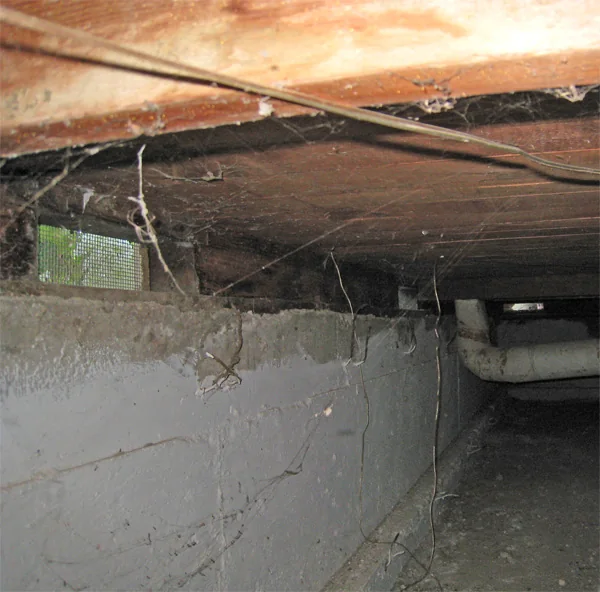
Older raised-foundation homes near Third Avenue and Castle Park trap moisture under the house fast. The IICRC-standard crew extracts and dries crawlspaces in about an hour's response time.

Crews access the crawlspace, identify the water source, and assess how far moisture has traveled along joists and subfloor.
Standing water is pumped or extracted from the crawlspace floor before drying equipment goes in.
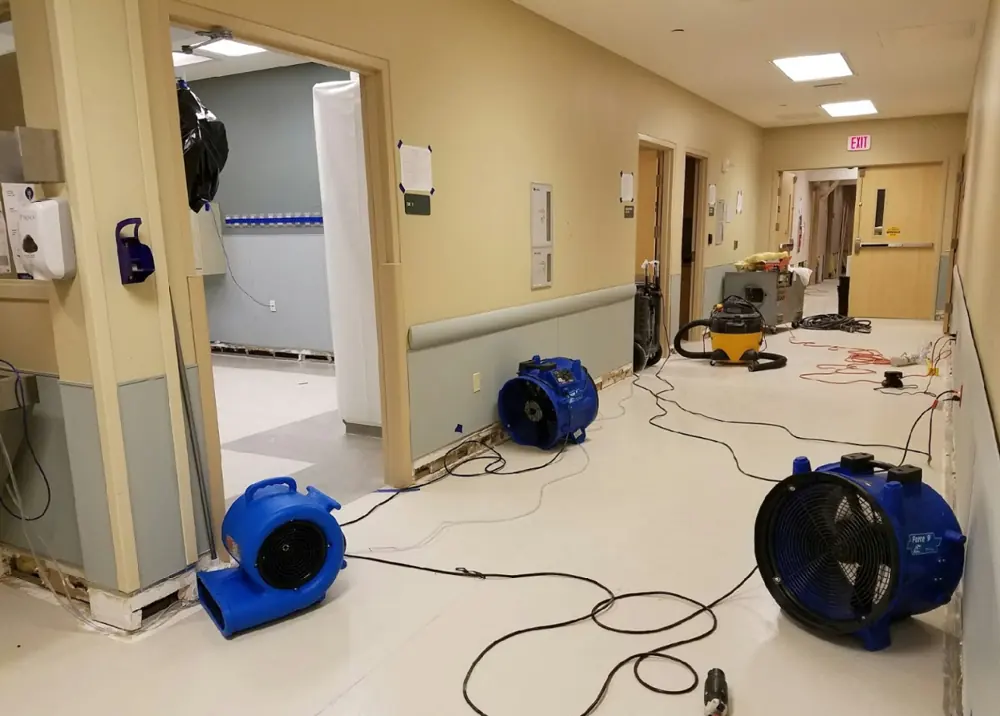
Industrial dehumidifiers and low-profile air movers dry joists, subfloor, and soil while moisture is tracked daily.
Crews install or repair the vapor barrier, treat framing against mold, and remove any debris left behind by the water.

While help is on the way, these first steps, done only where it is safe, limit the damage and protect the insurance claim.
Shut the supply off at the source, or close the home's main valve if the source is not obvious. Stopping the flow limits the damage more than anything else.
Switch off electricity to the affected area, but only if the breaker can be reached without standing in or touching the water.
Get a crew dispatched right away. The sooner extraction and drying begin, the more flooring, drywall, and belongings can be saved.
Take photos and a short video of the water and the affected rooms before anything is moved, so the insurance claim starts strong.
Crawlspace water removal in Chula Vista typically costs $800 to $4,000, depending on the size of the crawlspace, how much standing water accumulated, and whether a new vapor barrier or subfloor repair is needed. Sudden plumbing failures are generally covered by insurance, while long-term ground moisture from poor drainage is usually a homeowner expense.
Crews reach Chula Vista and the South Bay fast, from Eastlake and Otay Ranch to Rancho del Rey, Terra Nova, and Third Ave Village, and nearby Bonita and National City. See the full list on the areas served across Chula Vista page.
See all areas servedEvery loss is photographed, measured, and logged from the first visit, so the paperwork holds up with your insurance carrier.
Technicians follow recognized IICRC drying standards and prove the work with daily moisture readings, not guesswork.
Emergency dispatch any hour of the day or night, with a real crew on the way, not a callback in the morning.
A real crew dispatched any hour, not a callback in the morning.
Trained technicians following recognized IICRC drying standards.
Truck-mounted, portable, and submersible for any size loss.
The loss is documented and billed to the carrier directly.
No. Most newer homes are built slab-on-grade with no crawlspace at all. Raised-foundation homes with a true crawlspace are mainly found in older neighborhoods built before the 1960s, particularly near Third Avenue and Castle Park.
A musty smell inside the house, unexplained buckling or springiness in the floor, higher indoor humidity, or visible pest activity around the foundation are all signs worth checking. Crews can inspect and moisture-map the space directly.
It can be over time. Sustained moisture leads to wood rot in floor joists, mold that affects indoor air quality, and can attract pests. It is rarely an emergency in the same way a burst pipe is, but it should not be ignored.
Sudden causes like a burst supply line or a cracked sewer pipe are typically covered. Ongoing ground moisture from poor drainage or a missing vapor barrier is usually considered a maintenance issue and is the homeowner's responsibility.
A vapor barrier is heavy plastic sheeting laid across the crawlspace floor to block ground moisture from evaporating into the space. A missing or damaged barrier is one of the most common reasons a crawlspace stays damp long after a leak is fixed.
Chula Vista crews are on call 24 hours a day, local and fast, and can be on the way within the hour.
Call (619) 651-9086