Winter storms and attic HVAC units both soak insulation and stain ceilings below. Water Damage Restoration Chula Vista sends an IICRC-standard crew within about an hour, day or night.

Crews trace the leak to its source, whether it is roofing, flashing, an HVAC drain line, or a vent boot, before opening anything up.
Saturated insulation is removed and standing water on the attic floor or ceiling drywall is extracted with truck-mounted equipment.
Air movers and dehumidifiers dry rafters, decking, and the ceiling assembly below while crews track moisture daily with meters.
Crews replace insulation, patch or repair the roof and drain line, and restore stained or sagging ceiling drywall to match.

While help is on the way, these first steps, done only where it is safe, limit the damage and protect the insurance claim.
Shut the supply off at the source, or close the home's main valve if the source is not obvious. Stopping the flow limits the damage more than anything else.
Switch off electricity to the affected area, but only if the breaker can be reached without standing in or touching the water.
Get a crew dispatched right away. The sooner extraction and drying begin, the more flooring, drywall, and belongings can be saved.
Take photos and a short video of the water and the affected rooms before anything is moved, so the insurance claim starts strong.
Attic water damage cleanup in Chula Vista usually runs $600 to $4,500, depending on how much insulation needs replacing, whether ceiling drywall below has to come down, and if the roof or an HVAC drain line needs repair. Homeowner's insurance typically covers sudden leaks such as a failed drain line or storm-driven roof damage, though gradual neglect is usually excluded. Crews document everything for your adjuster.
Crews reach Chula Vista and the South Bay fast, from Eastlake and Otay Ranch to Rancho del Rey, Terra Nova, and Third Ave Village, and nearby Bonita and National City. See the full list on the areas served across Chula Vista page.
See all areas servedEvery loss is photographed, measured, and logged from the first visit, so the paperwork holds up with your insurance carrier.
Technicians follow recognized IICRC drying standards and prove the work with daily moisture readings, not guesswork.
Emergency dispatch any hour of the day or night, with a real crew on the way, not a callback in the morning.
A real crew dispatched any hour, not a callback in the morning.
Trained technicians following recognized IICRC drying standards.
Truck-mounted, portable, and submersible for any size loss.
The loss is documented and billed to the carrier directly.
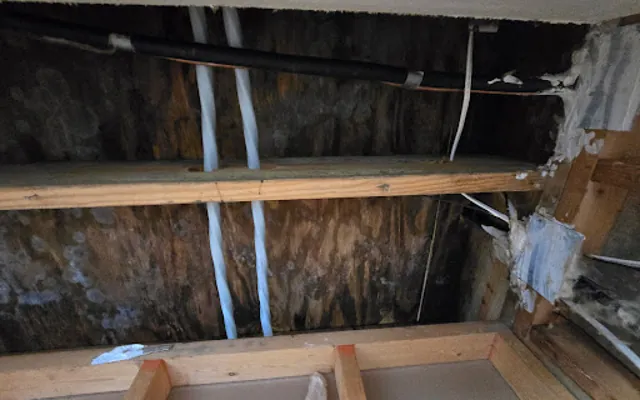
Look for brown or yellow stains on ceiling drywall, a musty smell in upstairs rooms, sagging insulation you can see through the attic hatch, or a spike in your water or energy bill. Dark streaking on rafters is also a sign of an older, slow leak.
Fiberglass batt insulation can sometimes be dried and reused if it was caught quickly and did not get soaked with contaminated water. Blown-in cellulose almost always has to be removed and replaced because it compacts and loses its R-value once wet.
Most policies cover sudden, accidental water damage such as a burst HVAC drain line or a storm that damages the roof. Damage from a roof that was already failing and never repaired is usually treated as maintenance and excluded, so timing matters.
Most attic drying takes 3 to 5 days with air movers and dehumidifiers running continuously. Larger areas, thicker insulation, or ceiling drywall that has to dry from both sides can extend that to about a week.
Not automatically. Mold needs sustained moisture, usually 48 hours or more, plus the right temperature. Fast extraction and drying within that window prevents most mold growth, which is why quick response matters more than the size of the leak.
Chula Vista crews are on call 24 hours a day, local and fast, and can be on the way within the hour.
Call (619) 651-9086