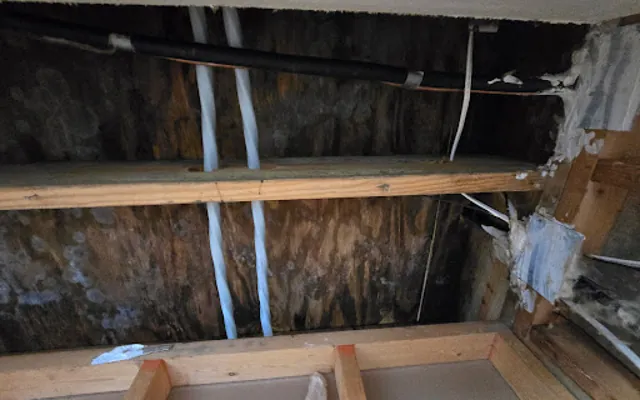
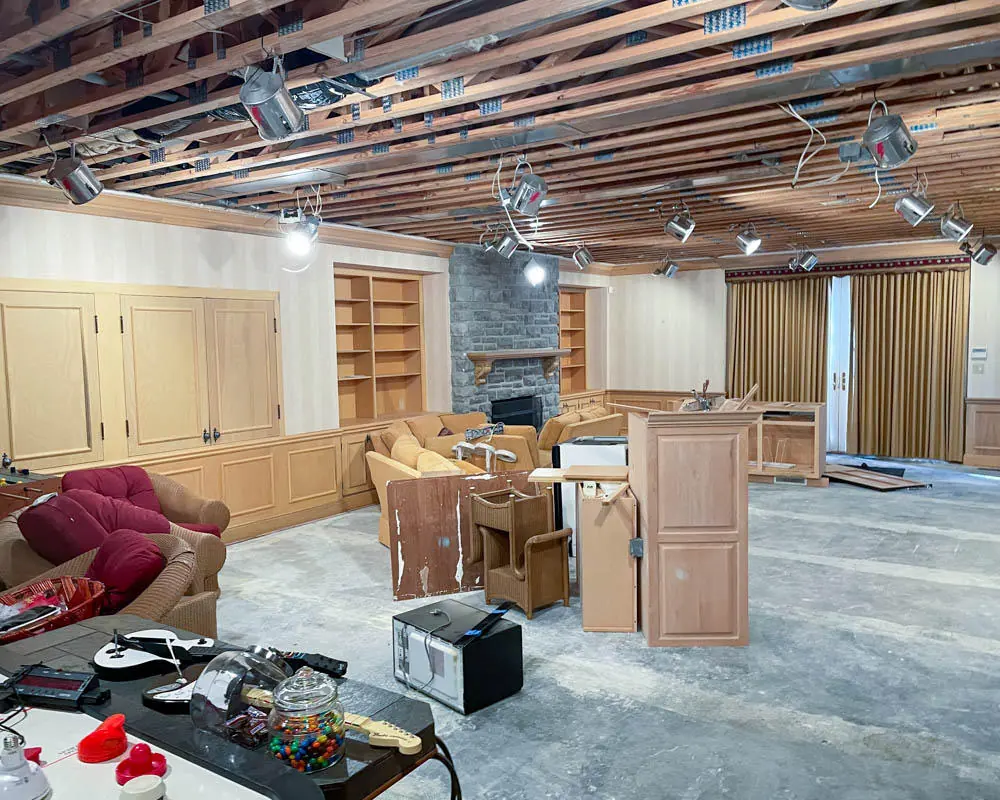
True ice dams are almost unheard of in coastal Chula Vista, but roof leaks that look similar can still soak a ceiling. Crews inspect and respond in about an hour, IICRC-standard.

Crews inspect the roof edge, gutters, and flashing to determine whether the leak is a true cold-weather ice blockage or a storm-driven leak.
Any water that has entered the attic or ceiling is extracted before drying equipment is set up.
Air movers and dehumidifiers dry the attic insulation, roof decking, and ceiling drywall below.
Crews repair affected insulation and drywall and coordinate gutter or flashing repair with a roofer to prevent recurrence.

While help is on the way, these first steps, done only where it is safe, limit the damage and protect the insurance claim.
Shut the supply off at the source, or close the home's main valve if the source is not obvious. Stopping the flow limits the damage more than anything else.
Switch off electricity to the affected area, but only if the breaker can be reached without standing in or touching the water.
Get a crew dispatched right away. The sooner extraction and drying begin, the more flooring, drywall, and belongings can be saved.
Take photos and a short video of the water and the affected rooms before anything is moved, so the insurance claim starts strong.
When a roof-edge leak resembling an ice dam does occur in Chula Vista, cleanup typically costs $500 to $3,000, driven mainly by insulation replacement and ceiling drywall repair rather than the roofing itself. Because this kind of cold-weather event is unusual for the area, resulting water damage is generally treated as a sudden covered loss under homeowner's insurance.
Crews reach Chula Vista and the South Bay fast, from Eastlake and Otay Ranch to Rancho del Rey, Terra Nova, and Third Ave Village, and nearby Bonita and National City. See the full list on the areas served across Chula Vista page.
See all areas servedEvery loss is photographed, measured, and logged from the first visit, so the paperwork holds up with your insurance carrier.
Technicians follow recognized IICRC drying standards and prove the work with daily moisture readings, not guesswork.
Emergency dispatch any hour of the day or night, with a real crew on the way, not a callback in the morning.
A real crew dispatched any hour, not a callback in the morning.
Trained technicians following recognized IICRC drying standards.
Truck-mounted, portable, and submersible for any size loss.
The loss is documented and billed to the carrier directly.
Genuine ice dams, which require sustained snow and freezing on a roof, are extremely rare in coastal Chula Vista. What crews usually find when a homeowner reports one is a storm-driven eave leak or a gutter clog that looks similar but has a different cause.
A rare overnight frost can form on north-facing or shaded roof sections after an unusual cold snap, especially at higher hillside elevations. This is a thin surface frost, not the sustained snow-and-ice buildup that causes a true ice dam.
Yes. Whether the cause is a genuine cold-weather event or a storm and gutter issue that looks similar, water is still entering your roof system, and identifying the actual source matters more than the label given to the problem.
Generally yes, since an unusual cold-weather event or a sudden storm-driven leak both qualify as sudden, accidental water damage. A gutter clog that was known about for a long time and ignored may be viewed differently.
The precautions common in snow climates, like heat cables or extra attic ventilation specifically for ice dams, are unnecessary in Chula Vista. Keeping gutters clear and flashing in good repair addresses nearly everything crews actually see.
Chula Vista crews are on call 24 hours a day, local and fast, and can be on the way within the hour.
Call (619) 651-9086