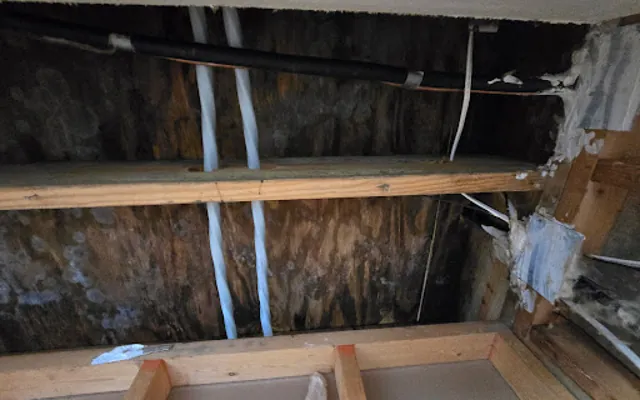
Atmospheric river storms push water through aging tile and shingle roofs across Chula Vista. The IICRC-standard crew responds in about an hour to stop ceiling damage before it spreads through the whole house.

Crews locate the entry point where possible and place tarps or temporary covering to stop further water intrusion during active weather. This first step usually takes under an hour once the crew arrives on site.
Standing water is extracted from ceiling cavities and attic insulation, and moisture meters trace the spread through framing. This step ensures no hidden moisture is missed before drying equipment goes in.
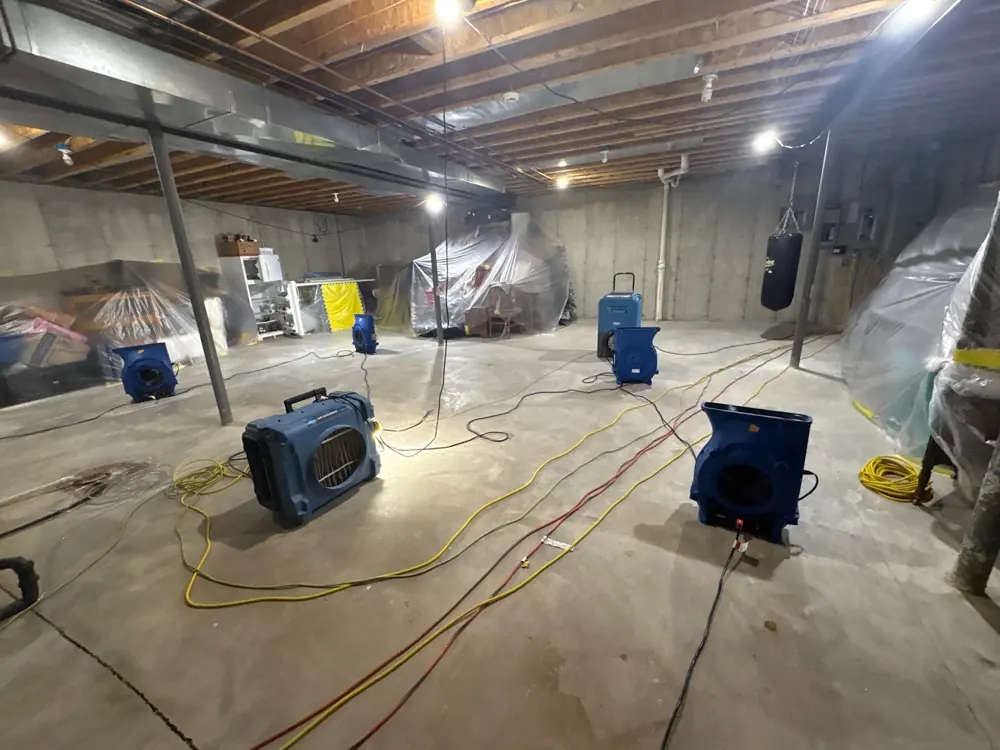
Air movers and dehumidifiers dry rafters, drywall, and insulation until moisture readings return to safe levels. Equipment typically stays in place for several days until every reading confirms the area is safe.
Damaged ceiling drywall is repaired and crews coordinate with a roofer for the underlying roof repair to prevent repeat leaks. Crews stay in touch throughout so you always know when the work will be finished.

While help is on the way, these first steps, done only where it is safe, limit the damage and protect the insurance claim.
Shut the supply off at the source, or close the home's main valve if the source is not obvious. Stopping the flow limits the damage more than anything else.
Switch off electricity to the affected area, but only if the breaker can be reached without standing in or touching the water.
Get a crew dispatched right away. The sooner extraction and drying begin, the more flooring, drywall, and belongings can be saved.
Take photos and a short video of the water and the affected rooms before anything is moved, so the insurance claim starts strong.
Roof leak water damage cleanup in Chula Vista typically runs $800 to $6,500, depending on how much ceiling and insulation is affected and whether framing needs drying versus replacement. Roof repair itself is billed separately by a roofer. Storm-related roof leaks are commonly covered by homeowner's insurance, and crews document the source and spread for your adjuster.
Crews reach Chula Vista and the South Bay fast, from Eastlake and Otay Ranch to Rancho del Rey, Terra Nova, and Third Ave Village, and nearby Bonita and National City. See the full list on the areas served across Chula Vista page.
See all areas servedEvery loss is photographed, measured, and logged from the first visit, so the paperwork holds up with your insurance carrier.
Technicians follow recognized IICRC drying standards and prove the work with daily moisture readings, not guesswork.
Emergency dispatch any hour of the day or night, with a real crew on the way, not a callback in the morning.
A real crew dispatched any hour, not a callback in the morning.
Trained technicians following recognized IICRC drying standards.
Truck-mounted, portable, and submersible for any size loss.
The loss is documented and billed to the carrier directly.
Check the attic after a storm for damp insulation, dark spots on rafters, or a musty smell. Ceiling stains and soft drywall are later signs. If you can safely access your attic after heavy rain, a quick look can catch a leak early and save money.
No. A bulging ceiling can hold a significant amount of water and may collapse without warning. Stay out of the room, place a container if it is actively dripping from a small area, and call for emergency extraction rather than trying to puncture it yourself.
Sudden storm-caused roof leaks are typically covered, including resulting ceiling and insulation damage. Damage from a roof that was already known to be failing and left unrepaired for a long period may be treated differently, so timing and documentation matter.
Crews handle the water damage mitigation, drying, and interior repairs, and crews coordinate scheduling with roofing contractors for the actual roof repair or replacement so the two processes move forward together smoothly. Please ask the crew any follow-up questions once crews take a look at the situation in person.
Most single-room roof leaks dry in three to six days with equipment running continuously. Larger areas with soaked insulation across multiple rafter bays can take a week or more, especially during Chula Vista's humid winter storm season. Every situation is a little different, so crews confirm the exact details once crews see the damage firsthand.
Chula Vista crews are on call 24 hours a day, local and fast, and can be on the way within the hour.
Call (619) 651-9086