Castle Park's 1950s and 1960s slab homes have original galvanized drain lines and mid-century plumbing past their lifespan, making slab leaks and sewer backups a regular call. The IICRC-standard crews extract water fast.

Crews inspect roofing, flashing, water heater connections, drains, and supply line entry points to determine whether the source is a roof leak, a burst supply line, or a sewer backup rising through your Castle Park home's aging infrastructure.
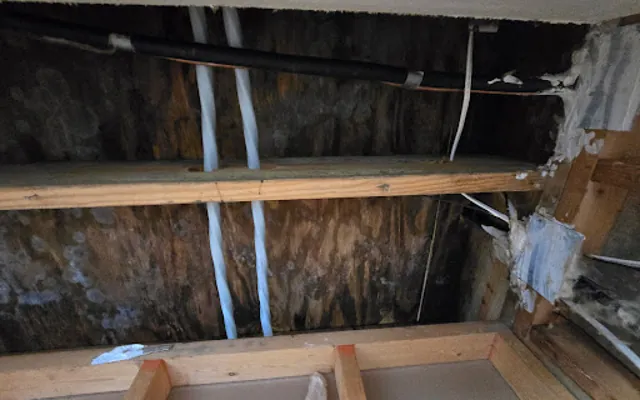
Saturated insulation comes out and truck-mounted equipment removes standing water from the attic floor and ceiling cavity while crews photograph the damage and record moisture in framing and decking.
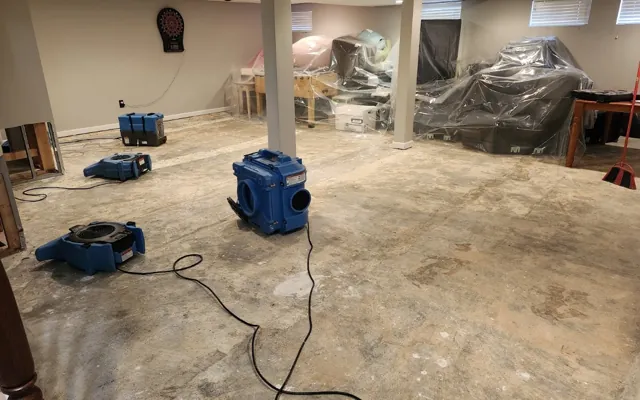
Dehumidifiers and air movers dry rafters, decking, and ceiling assembly continuously while daily meter readings track progress toward trained-dry status in Castle Park's coastal humidity.

Attic water damage cleanup in Castle Park usually runs $600 to $4,500, depending on how much insulation needs replacing, whether ceiling drywall below has to come down, and if the roof or an HVAC drain line needs repair. Homeowner's insurance typically covers sudden leaks such as a failed drain line or storm-driven roof damage, though gradual neglect is usually excluded. Crews document everything for your adjuster.
Castle Park's small owner-occupied slab homes built in the 1950s and 1960s run original galvanized supply lines and cast iron drains that have long exceeded their working life. A corroded joint under the slab or a root-choked sewer lateral is the common way water damage starts here, often showing up as dampness under flooring or a persistent slab-level odor. Castle Park's 1950s and 1960s concrete slab homes were built with galvanized steel supply lines and mid-century drain systems that are now corroded and failing. A pinhole in old galvanized pipe or a backed-up sewer lateral easily floods into the attic cavity above, where coastal humidity speeds mold growth. From Castle Park, crews also cover nearby Harborside, Terra Nova, Northwest Chula Vista, Rancho del Rey, Bonita, National City. See every neighborhood and town on the full service area page.
See all areas servedEvery loss is photographed, measured, and logged from the first visit, so the paperwork holds up with your insurance carrier.
Technicians follow recognized IICRC drying standards and prove the work with daily moisture readings, not guesswork.
Emergency dispatch any hour of the day or night, with a real crew on the way, not a callback in the morning.
A real crew dispatched any hour, not a callback in the morning.
Trained technicians following recognized IICRC drying standards.
Truck-mounted, portable, and submersible for any size loss.
The loss is documented and billed to the carrier directly.
Galvanized steel was the standard in the 1950s and 1960s, but it corrodes from the inside out over 50 to 70 years. Castle Park's older homes are at the age where those pipes fail suddenly, often at joints or fittings where corrosion is worst.
Yes. If a sewer lateral backing up into your Castle Park home travels through wall cavities or attic spaces, water and sewage can accumulate above the ceiling. Crews identify the backup location so your plumber knows where to clean or repipe the drain.
Crews are on call 24 hours a day and can be on the way to Castle Park within the hour.
Call (619) 651-9086