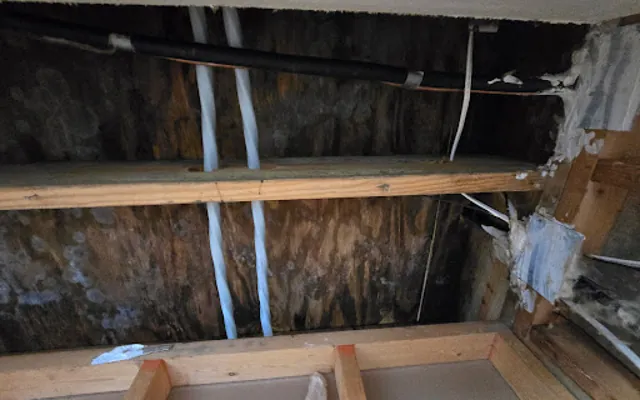
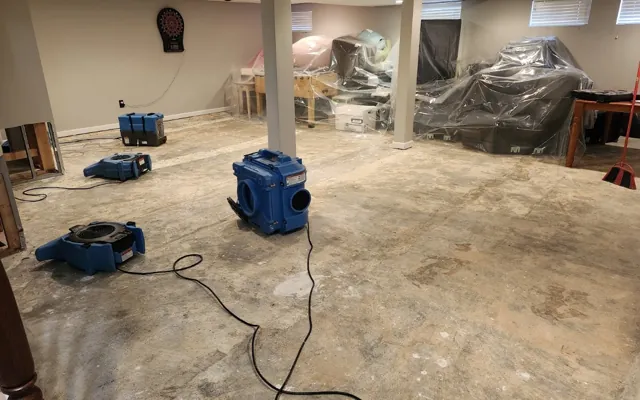
Roof-edge leak in your Coronado home from salt-air corrosion or storm? Crews respond across the bay fast, inspect the roof, extract water, and dry your attic.

Crews inspect the roof edge, gutters, and flashing to assess salt-air damage and identify the leak source. Coronado's coastal exposure means crews pay special attention to metal fasteners and flashing.
Any water in the attic or ceiling is extracted immediately. Wet insulation combined with salt-air humidity is a serious mold risk, so fast extraction is critical.
Air movers and dehumidifiers run for 3 to 5 days given the coastal humidity. Crews monitor with readings until the attic and ceiling are verified safe.

When a roof-edge leak resembling an ice dam does occur in Coronado, cleanup typically costs $500 to $3,000, driven mainly by insulation replacement and ceiling drywall repair rather than the roofing itself. Because this kind of cold-weather event is unusual for the area, resulting water damage is generally treated as a sudden covered loss under homeowner's insurance.
Coronado is its own city across the bay from Chula Vista, mixing affluent older homes with condos and a large renter and military population tied to the naval base. The older beachfront properties carry original plumbing and roofing exposed to constant salt air, and access along the Silver Strand means a supply line break or roof leak there gets the same fast response as anywhere else. Coronado's older beachfront and hillside homes have roofing and metal flashing that corrode fast in salt air. Gutters and flashing fail sooner here than in inland areas, creating roof-edge water backups during storms or even calm periods when salt spray degrades materials. From Coronado, crews also cover nearby Eastlake Trails, Rolling Hills Ranch, San Miguel Ranch, Eastlake Vistas, San Ysidro, Bella Lago. See every neighborhood and town on the full service area page.
See all areas servedEvery loss is photographed, measured, and logged from the first visit, so the paperwork holds up with your insurance carrier.
Technicians follow recognized IICRC drying standards and prove the work with daily moisture readings, not guesswork.
Emergency dispatch any hour of the day or night, with a real crew on the way, not a callback in the morning.
A real crew dispatched any hour, not a callback in the morning.
Trained technicians following recognized IICRC drying standards.
Truck-mounted, portable, and submersible for any size loss.
The loss is documented and billed to the carrier directly.
Yes, salt air accelerates corrosion in metal fasteners, flashing, and gutters by 3 to 5 times. A Coronado roof built 30 years ago shows more deterioration than an inland roof of the same age.
Yes, the constant salt air and high moisture mean drying takes longer. Crews typically run equipment 4 to 5 days instead of 2 to 3, and crews monitor carefully until readings confirm safety.
Crews are on call 24 hours a day and can be on the way to Coronado within the hour.
Call (619) 651-9086